
🇧🇷 Débora Dias Receitas
@
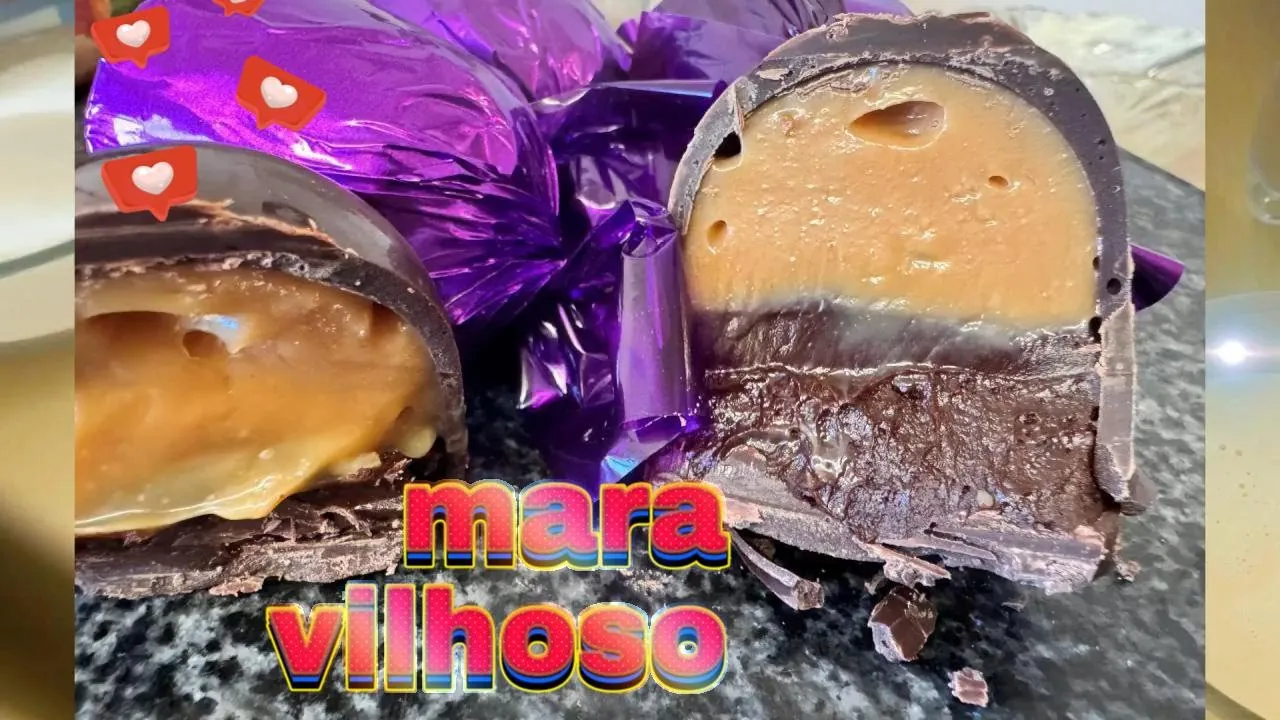
Bonbon recipe filled with a delicious caramel cream and a semi-sweet chocolate truffle, ideal for selling or gifting during Easter.
Recipe Video
Ingredients
- 180g de Sugar
- 80g de Butter or margarine
- 2cans de Sweetened condensed milk
- 1tablespoon de Vanilla extract
- 1pinch de Salt
- 2cartons de Heavy cream
- 300g de Semi-sweet or milk chocolateSubstitui por: chocolate fracionado
Instructions
For the caramel, melt the sugar in a saucepan over medium heat, stirring constantly with a square-tipped wooden spoon to prevent burning.
Dica: Stir the entire time. If lumps form, try to dissolve them, but do not let it burn.
As soon as the sugar has melted, carefully add the heavy cream to avoid burns.
Dica: If doubling the recipe, switch to a larger pot, as the cream may bubble up.
Incorporate the pinch of salt and the vanilla extract into the melted sugar mixture, stirring until homogenized.
Dica: Continue stirring until the caramel is as dissolved as possible.
Add the cans of sweetened condensed milk and mix well. Transfer the contents to another saucepan, if necessary, to prevent overflow.
Dica: This filling can also be used to fill cakes or 'spoon eggs' (layered desserts).
Cook the mixture over medium heat, stirring constantly with a spatula, until the cream thickens and you can see the bottom of the pan when you drag the spatula across it. The consistency should be creamy, not hard like fudge.
Dica: When you tilt the pan, the candy should run slowly, without peeling away rigidly.
Let the caramel filling cool completely before use, preferably chilled.
For the truffle filling, melt 100g of chocolate in 30-second intervals in the microwave, stirring after each interval, leaving a few small pieces unmelted to finish with residual heat.
Dica: The bowl and spatula must be completely dry, as chocolate does not tolerate moisture.
Mix 2 to 3 tablespoons of heavy cream into the melted chocolate to achieve a creamy and shiny consistency. If it hardens, add a little more heavy cream gradually.
Dica: Add the heavy cream gradually. The consistency should be creamy, slightly softer.
For the shell, prepare the remaining 200g of chocolate (optionally, temper it using the thermal shock method). Use the bonbon molds, ensuring they are very dry.
Dica: If tempering the chocolate, once you feel the coolness on your lower lip, transfer it to a clean, dry bowl—never the one used for melting.
Fill the molds with chocolate up to the marking, using a pastry bag, and press with the interlocking part of the mold. Tap lightly to remove air bubbles, and refrigerate until the shell turns whitish.
Dica: Avoid touching the mold directly with your hand, as the heat from your hand can affect the chocolate.
Remove the top and middle layer of the mold. Fill the shell first with the semi-sweet truffle filling, and then fill with the creamy caramel filling. Use more caramel than truffle to optimize costs.
Dica: Be careful not to let the filling touch the edges of the shell to ensure a perfect seal.
Seal the bonbons by filling the remaining space with more melted chocolate, tapping gently to settle, and then chill again (or freeze) until the mold is almost entirely white and the bonbons release easily.
Dica: When selling, wear gloves and a hairnet, and avoid wearing perfume due to chocolate's sensitivity.
Unmold the bonbons by trimming any excess chocolate flash with scissors reserved only for chocolate work, discarding any trimmed chocolate if it has come into contact with the filling.
Dica: If there are pinholes in the shells, use extra melted chocolate to patch them.
Wrap the finished bonbons in appropriate cellophane twist ties for truffles. The suggested shelf life for sale is up to 5 days.
Dica: The natural shelf life of the product is about six to seven days, but selling in advance ensures the quality perceived by the customer.
Did you enjoy this recipe?
Dietary Info
Allergens Present
Nutrition Facts
TACO Table - per serving
- Energy428 kcal21%
- Carbohydrates59 g20%
- Protein5 g6%
- Total Fat20 g36%
- Dietary Fiber1 g3%
*Daily reference values based on a 2,000 kcal diet (ANVISA). Data calculated from the TACO Table (UNICAMP).
Cuisine Type
brasileiraRequired Equipment
You might also like



Comments
Leave a comment
Be the first to comment!